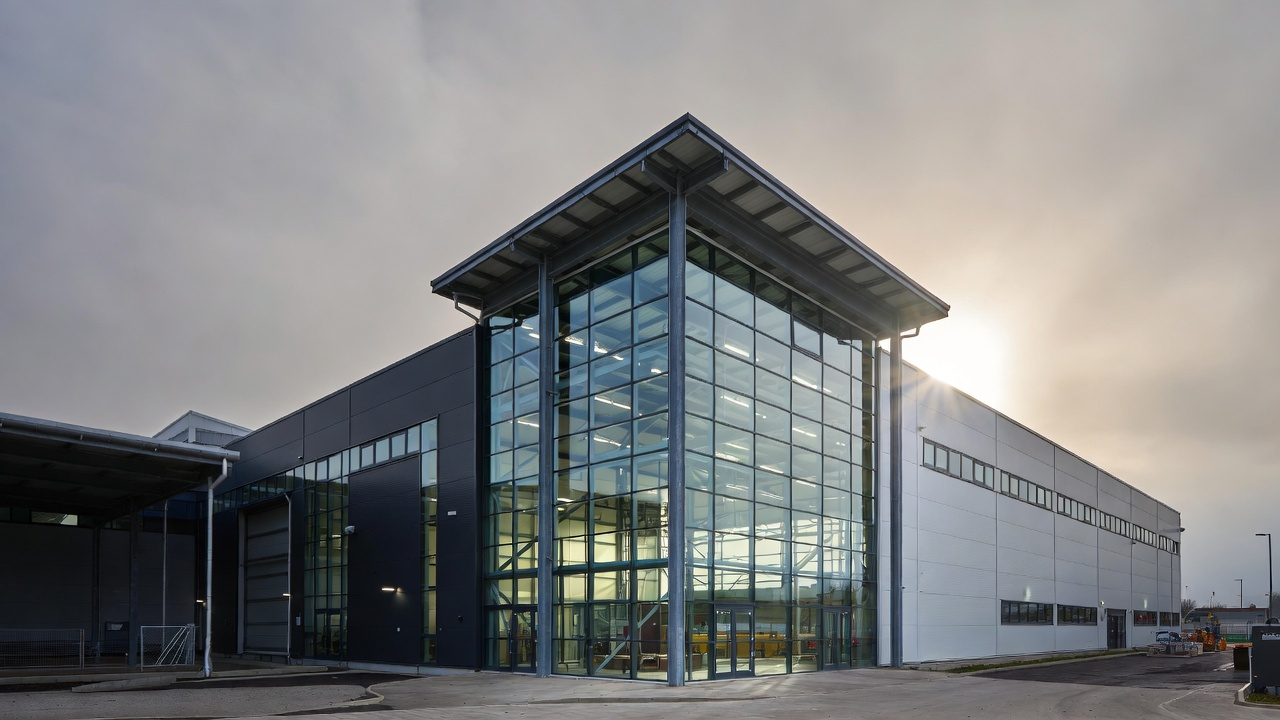
Ireland's industrial and logistics sector is entering one of its most active development cycles in recent memory. Driven by a combination of nearshoring demand, e-commerce infrastructure growth, and Ireland's strategic position as a European distribution hub, the pipeline of planned and permitted I&L projects across the country is substantial — and it's accelerating.
For specialist contractors operating in this space, the implications are significant. This is not a short-term spike — the structural drivers behind I&L demand in Ireland are multi-year trends that show no sign of reversing.
What's driving the pipeline
Several converging factors are fuelling the current wave of I&L development in Ireland. The post-pandemic recalibration of global supply chains has led multinational occupiers to prioritise resilience over pure cost efficiency, and Ireland — with its skilled workforce, EU membership, English-speaking environment, and established regulatory framework — is a natural beneficiary of that shift.
E-commerce penetration continues to grow, and with it the demand for last-mile distribution facilities, fulfilment centres, and cold-chain logistics infrastructure. The major logistics operators and third-party logistics providers are all expanding their Irish footprints, and the developers serving them need contractors who understand the technical requirements of these buildings.
At the same time, Ireland's indigenous manufacturing base — particularly in food production, agri-tech, and light manufacturing — is generating demand for purpose-built production and warehousing facilities that sit firmly in the I&L category but require a more technically sophisticated approach than a standard shed.
Where the activity is concentrated
The Dublin metropolitan area remains the primary hub, particularly along established logistics corridors in west Dublin, north Dublin, and south-west Dublin. However, the pipeline is increasingly national in scope. Regional locations including Cork, Limerick, and the midlands are seeing growing levels of planning activity, driven by lower land costs and improving transport infrastructure.
The scale of individual developments is also notable. Where the Irish I&L market was historically characterised by relatively modest unit sizes, we are now seeing speculative and pre-let developments at scales more commonly associated with the UK and continental European markets — facilities of 100,000 square feet and above, with increasingly sophisticated technical specifications.
The I&L sector in Ireland has matured significantly. The buildings being planned and delivered today are technically complex — temperature-controlled environments, automated handling systems, high-bay racking, and sustainability requirements that demand a contractor with genuine technical capability.
What this means for contractors
The growing sophistication of I&L buildings is changing what clients and developers expect from their contractors. A decade ago, a standard industrial unit could be delivered by any competent contractor. Today, the specification of a modern logistics facility — with its MEP complexity, environmental controls, fire engineering requirements, and compressed programmes — increasingly requires a contractor with genuine sector knowledge and delivery capability.
Design and build delivery is becoming the dominant procurement model in this sector, and for good reason. Clients want programme certainty, single-point accountability, and a contractor who can manage the design process rather than simply building to a completed set of drawings. For contractors set up to deliver D&B — with pre-construction capability, supply chain depth, and integrated project controls — the opportunity is substantial.
CONROY's position
Industrial and logistics is one of CONROY's six sectors, and it is our primary area of focus in the near term. We have structured the business specifically to compete in this space — with design & build capability, ISO-aligned management systems, and a delivery model built around competence and director-level accountability.
We are actively engaging with developers, investors, and owner-occupiers across the I&L sector in Ireland, and we see 2026 and beyond as a period of significant opportunity for a contractor positioned to deliver these increasingly complex buildings to the standard the market now demands.
If you are planning an industrial or logistics project and want to explore how CONROY can support your delivery, we would welcome the conversation. Get in touch.